Daughters really do share deep rooted emotional trauma with/inherit deep rooted emotional trauma from their mothers and I know it’s true bc whenever I try to approach a sensitive topic with my mom, no matter how calm and civil and patient I intend to be no matter how much I’ve practiced what I want to say no matter how OK I was even a moment before, I always involuntarily burst into desperate, angry hysterics the moment I open my mouth. As though it’s coming from a place buried so far within me I cannot even register its existence until it has overtaken me. And I know I’m not alone on this either. There is so much we internalize from our mothers that we never learn to contend with. That we never even learn to recognize
“At the macro level, the mother wound is a matrilineal wound—a burden that manifests in mothers, and is passed on from generation to generation. It’s the pain and grief that grow in a woman as she tries to explore and understand her power and potential in a society that doesn’t make room for either, forcing her to internalize the dysfunctional coping mechanisms learned by previous generations of women. The mother wound reflects the challenges a woman faces as she goes through transformations in her life in a society where the patriarchy has denied us ongoing matrilineal knowledge and structures.”
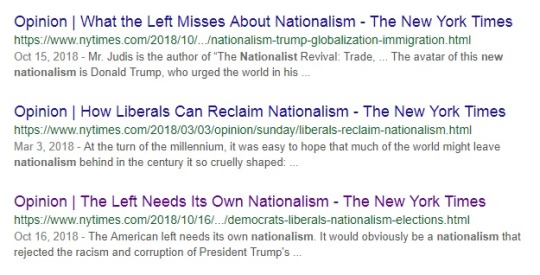
Trump called himself a nationalist he called himself a nationalist he blatantly and knowingly called himself a nationalist fuck fuck fuck fuck fuck fuck fuck fuck
At this point he could just flat out say he’s a fascist and conservatives would not give a shit
I 100% expect that’s what’s coming next.
How long until the NYT runs articles about “is nationalism actually good?” with the same false neutrality that’s helped legitimize everything else he’s done?
concept: we’re both home in our underwear after a long day at work. your head is in my lap; my hands playing with your hair. we can hear rain against the windowpane outside. it’s quiet, and comfortable, and i love you.
The Trump administration is working on a plan to severely narrow the legal definition of gender, according to a report in The New York Times on Sunday.
The proposed policy, according to the Department of Health and Human Services, would define gender “on a biological basis that is clear, grounded in science, objective and administrable,” meaning it would define gender as either male or female as determined by genitalia at birth. Any dispute about an individual’s gender would require genetic testing. This would have major repercussions for the transgender and gender nonconforming communities ― particularly in regard to health care.
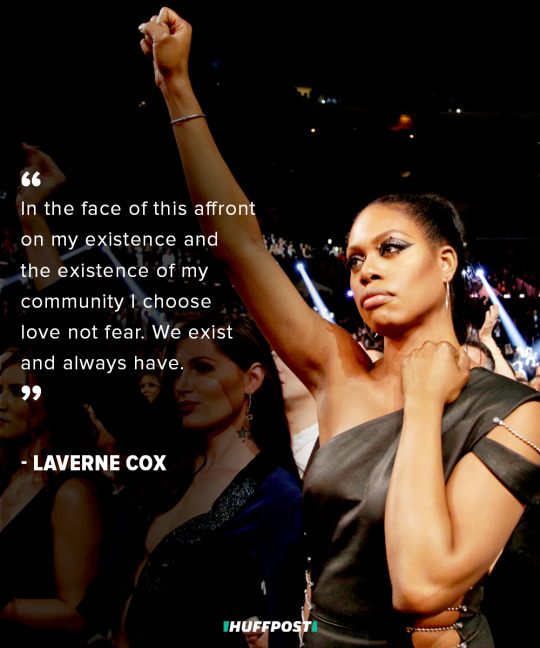
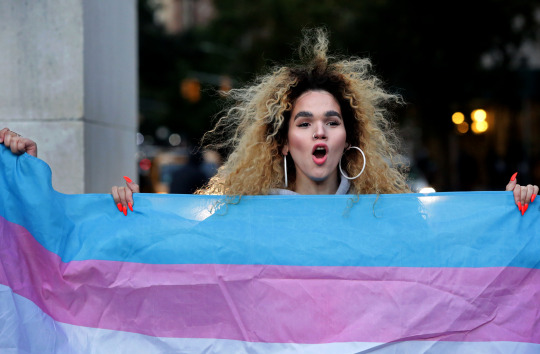
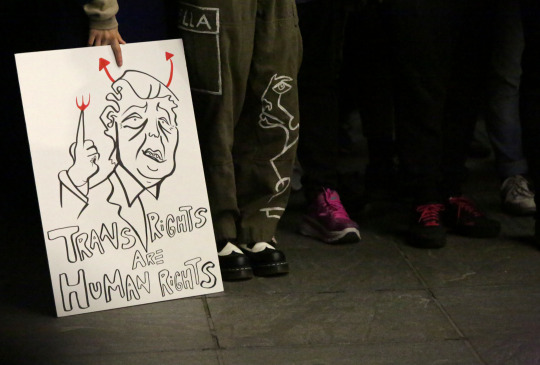
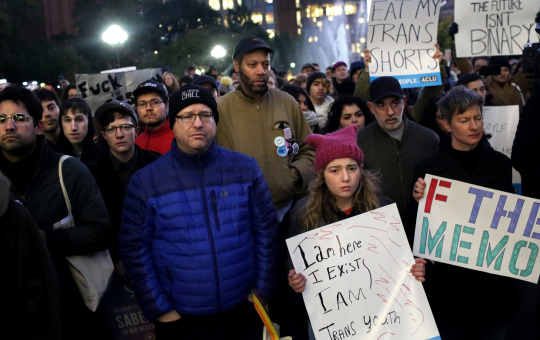
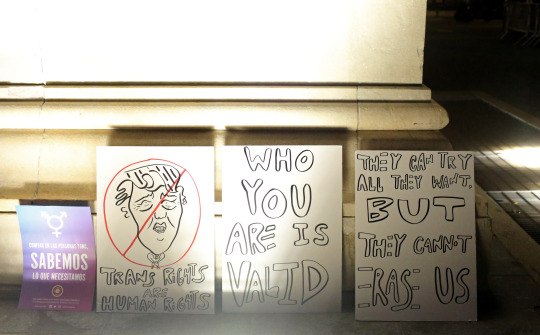
Since the Trump plan was revealed, protesters have been gathering online ― often using the hashtag #WontBeErased ― and in person around the country. On Sunday night, several hundred people gathered in Washington Square Park in New York City.
But there is still a lot of work to be done to make sure the trans and gender nonconforming communities are protected.
You’ve likely seen people coming out in droves to encourage others to vote; it’s one of the most important things you can do as an American. Casting ballots at the federal, state and local levels affects transgender rights. Check Vote.org for ways to promote turnout in your area. Call your friends and family members nearby to go to the polls with you, and remind those in other states to vote too.
Educate yourself
Being an ally isn’t just patting your trans or nonbinary friends on the back or retweeting them occasionally. It’s about respect and fighting for their rights. The first step to being a good ally is educating yourself on the basics — knowing someone’s preferred pronouns, avoiding stereotypes and learning what policies in government directly affect the trans and gender nonconforming communities. You can find a primer on those issues and more here.
Promote helpful resources and trans-led organizations
While many “prominent national organizations are not led by trans or nonbinary people,” many are and need help on both the national and local levels. Some of those organizations, according to Out magazine are: Audre Lorde Project, Casa Ruby, Familia: Trans Queer Liberation Movement, Fierce, Organizacion Latina de Trans en Texas, Southerners on New Ground, Sylvia Rivera Law Project, Trans Latin@ Coalition, Trans Law Center and Trans Lifeline. More comprehensive lists can be found at the Trans Justice Funding Project and Borealis Philanthropy’s Fund for Trans Generations.
Sharing numbers like the National Suicide Prevention Lifeline at 800-273-TALK (8255), the Trevor Project at 866-4-U-TREVOR (866-488-7386) and Trans Lifeline at 877-565-8860 can be immensely helpful for those in crisis.
Share the work of trans activists and journalists
Groups like Lambda Legal, the ACLU and the Transgender Law Center are legal organizations that ofter extensive information about trans rights and policies that affect them. Keep an eye on their social media pages to see if they’re holding events you can take part in or to share their messaging.
Additionally, sharing the work of trans and gender nonconforming journalists helps spread the messaging being put out by the community for the community. Too often, work about the trans community is written by people who are not members of that community ― which can be completely OK, as long as it’s done correctly. This piece in Them does an excellent job of explaining the problem with media organizations not hiring trans reporters to cover trans issues.
Everyone who supports trans and non-binary rights must reblog this. Everyone is equal, and nothing can change that. We will stand for the freedom of comfort and identity of our genders. #WontBeErased





 Blog
Blog 